
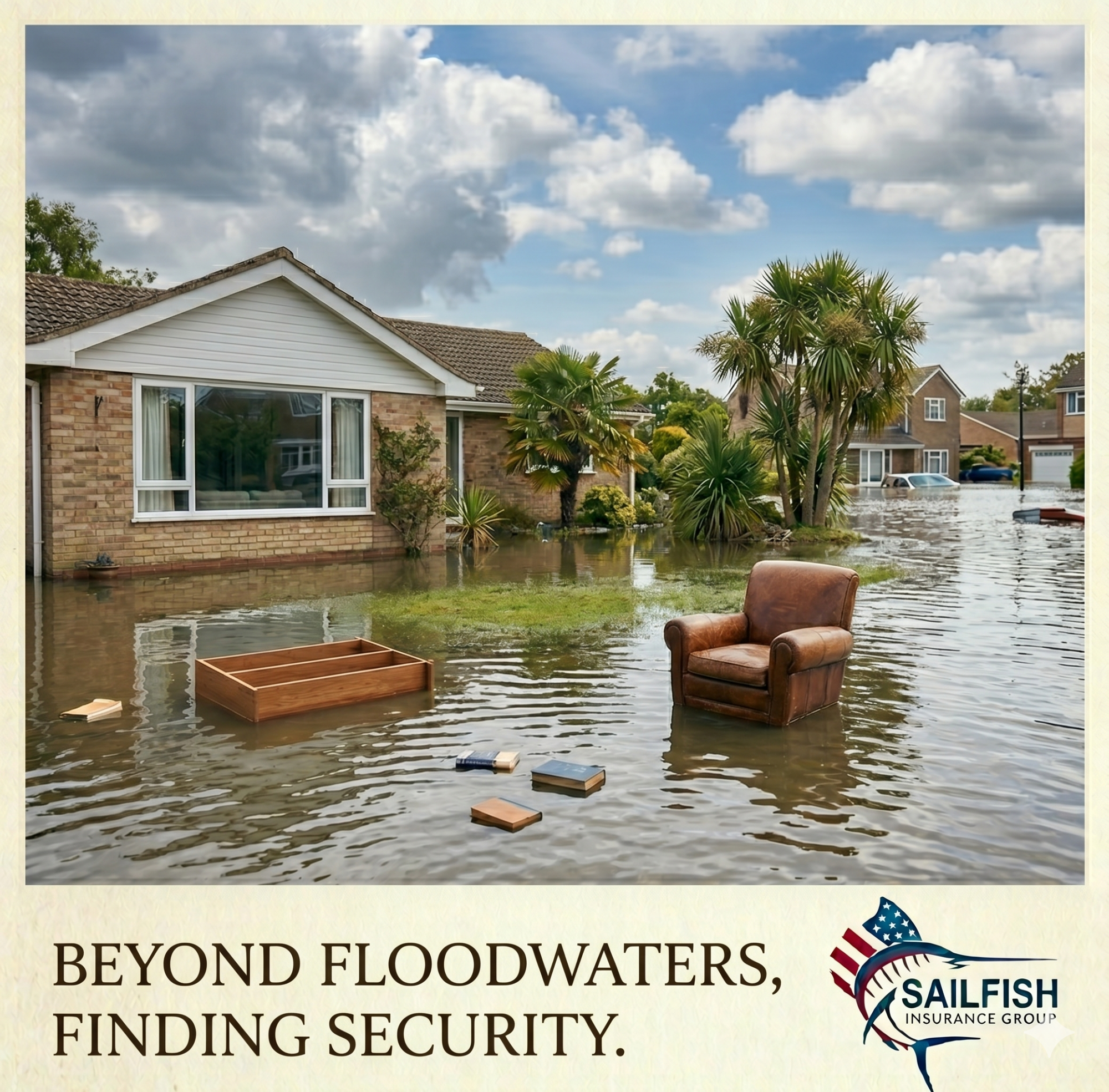
If the last few years have taught us anything, it’s that “low risk” doesn’t mean “no risk.” As we move through 2026, the landscape of home protection is shifting faster than a spring tide. With the National Flood Insurance Program (NFIP) currently extended through September 30, 2026, and private market capacity reaching record highs, there has never been a more critical time to evaluate your home’s defense against the water.
The Reality Check: 1 Inch = $25,000
It sounds like an exaggeration until it happens to you. A mere one inch of water in a standard-sized home can cause upwards of $25,000 in damage.
Many homeowners still operate under the dangerous myth that their standard Homeowners Insurance covers flooding. It does not. Standard policies generally cover “sudden and accidental” water damage (like a burst pipe), but if water touches the ground before entering your home—whether from a storm surge, overflowing river, or even just a heavy Florida downpour—it is classified as a flood.
Why 2026 is Different
The “old” rules of flood insurance are being washed away. Here is what you need to know about the current market:
-
Risk Rating 2.0 is the New Standard: FEMA’s updated pricing model now looks at your specific property’s unique risk—elevation, proximity to water, and rebuilding costs—rather than just a broad “zone” on a map.
-
The Private Market Explosion: In 2026, private insurers are offering more competition than ever. Often, these policies provide higher coverage limits than the NFIP’s $250,000 cap and include “loss of use” coverage (which pays for a hotel if you’re displaced).
-
The 30-Day Waiting Period: Most NFIP policies have a 30-day waiting period before they take effect. If a storm is named and heading your way, it’s already too late to buy protection.
Is Your Home Actually “Safe”?
MetricStatisticClaims Outside High-Risk Zones~25% of all flood claimsBillion-Dollar DisastersUp 20% over the last decadeNFIP Reauthorization DeadlineSeptember 30, 2026
Pro Tip: Don’t just rely on FEMA maps. Use modern tools like RiskFactor.com to see how climate-driven rain patterns and local development might have increased your home’s vulnerability since you last checked.
How to Get Started
-
Inventory Your Home: Take a video of every room and open every closet. Having digital proof of your belongings makes the claims process significantly faster.
-
Compare NFIP vs. Private: Ask your agent to run quotes for both. Private insurance might offer better rates or broader coverage for high-value homes.
-
Check Your Deductible: A higher deductible can lower your premium, but ensure you have that cash tucked away in an emergency fund.
At Sailfish Insurance Group, we believe peace of mind shouldn’t be a luxury—it should be a plan. Don’t wait for the clouds to turn gray. Whether you’re in a high-risk zone or just want to protect your biggest investment, let’s find the right coverage for you before the next big one hits.