
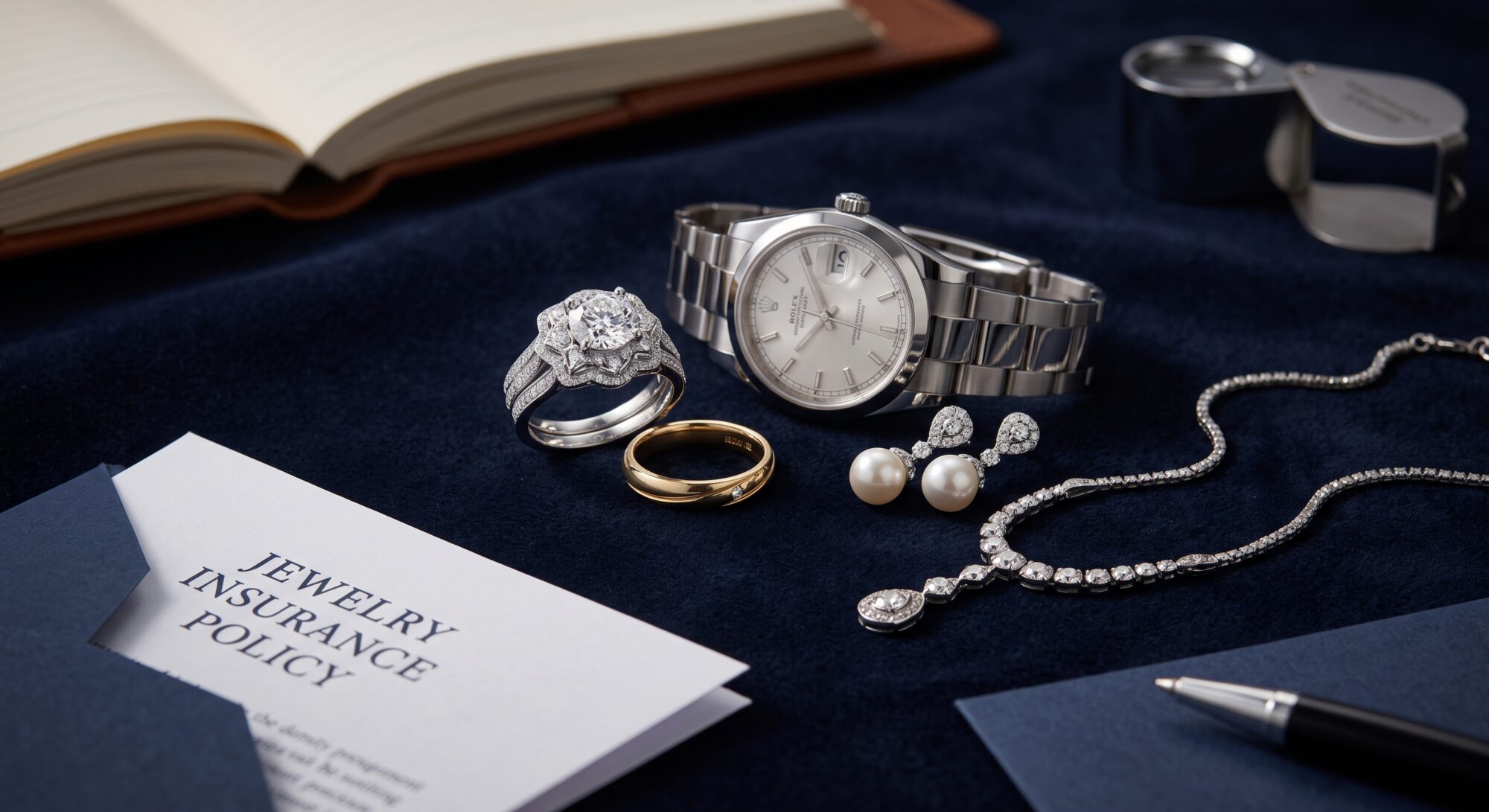
Whether it’s a newly acquired engagement ring, an anniversary watch, or an antique family heirloom passed down through generations, fine jewelry carries deep sentimental—and financial—value. Naturally, most people assume that once they lock their front door, their homeowners or renters insurance policy has them covered if the unexpected happens.
Unfortunately, thousands of policyholders learn the hard way that standard home insurance leaves major gaps when it comes to fine jewelry.
Here is what you need to know about how jewelry insurance actually works, the critical limitations of standard home policies, and how to properly protect your most cherished pieces.
The Hidden Catch: Homeowners Insurance “Sub-Limits”
Standard homeowners or renters insurance policies include personal property coverage, which protects belongings like furniture, clothes, and electronics. While fine jewelry is technically personal property, insurance companies place strict sub-limits on high-value category items.
-
The Reality: Most standard homeowners policies cap jewelry theft claims at $1,500 to $2,500 total—not per item, but for your entire collection.
-
The Problem: If an $8,000 engagement ring and a $3,000 watch are stolen from your home during a break-in, your policy may only pay out $1,500, leaving you to cover the remaining $9,500 out-of-pocket.
Exclusions: What Standard Policies Don’t Cover
Beyond low financial caps, basic property policies restrict how a loss occurs. They typically only cover “named perils”—specific catastrophic events like fire, lightning, or forced-entry burglary.
Standard home insurance almost always excludes the two most common ways people lose jewelry:
-
Accidental Loss (“Mysterious Disappearance”): If your ring slips off your finger while swimming in the ocean, or you misplace your favorite earrings while traveling, standard home insurance won’t pay a dime.
-
Accidental Damage: If you knock your hand against a granite countertop and chip a diamond or bend a prong, basic property insurance will not cover the repair.
Two Ways to Properly Protect Fine Jewelry
To get full, real-world protection for pieces worth more than $1,500, you have two primary options:
1. Add a Scheduled Rider (Endorsement) to Your Home Policy
You can “schedule” specific pieces of jewelry onto your existing homeowners or renters policy.
-
Pros: Consolidates your premiums into a single bill. Raises the coverage limit to match the appraised value of the item.
-
Cons: If you ever file a claim for a lost ring, that claim goes on your primary home insurance record. This could increase your entire home insurance premium or affect your policy renewal status.
2. Purchase a Standalone Jewelry Insurance Policy
A specialized policy through a dedicated jewelry insurer (such as Jewelers Mutual) operates completely independently of your home insurance.
-
Pros: Covers “all risks”—including accidental loss, damage, disappearance, and worldwide travel. Claims will never impact your home insurance rates. They often offer $0 deductible options and allow you to work directly with your preferred local jeweler for repairs or replacements.
How to Get Started
Protecting your jewelry is straightforward, but it requires a few key steps:
-
Get an Up-to-Date Appraisal: Jewelry values fluctuate with precious metal and gemstone markets. Insurers require a professional appraisal (or detailed sales receipt for new purchases) to verify the item’s specs and replacement value.
-
Take Detailed Photos: Keep clear, high-resolution photos of your jewelry, including any hallmark stamps or unique inscriptions.
-
Review Policy Terms: Look for policies offering worldwide coverage (so you’re covered on vacation) and same-kind-and-quality replacement guarantees.
The Bottom Line
Don’t wait until a piece goes missing to pull out your policy paperwork. Take a moment today to check your current homeowners personal property sub-limits. Spending a few dollars a month on a scheduled rider or specialized jewelry policy is a small price to pay for true peace of mind.