
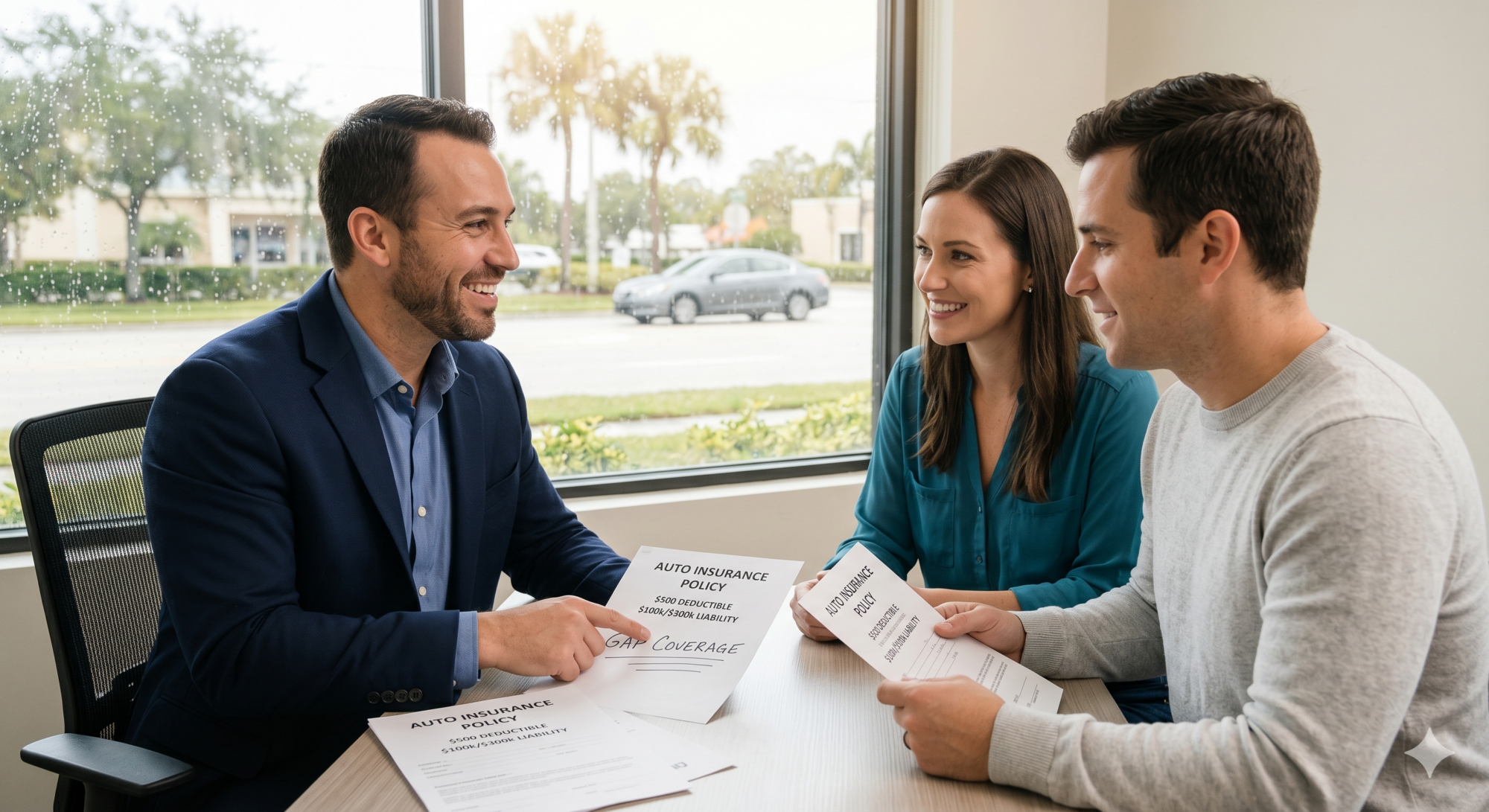
We’ve all seen the commercials. Puppets, emus, and upbeat actors all promise the same thing: the lowest price for the “same” coverage. If you look at a declarations page from Company A and Company B, they might look identical. Both have a $500 deductible, both have $100,000/$300,000 liability limits, and both offer roadside assistance.
On paper, auto insurance looks like a commodity—a gallon of milk or a box of nails where the only variable is the price tag.
But here’s the secret the “click-to-buy” websites won’t tell you: Insurance is a legal contract, not a retail product. And in the world of legal contracts, the person who interprets, manages, and fights for that contract makes all the difference.
1. The “Same” Coverage Isn’t Always the Same
Two policies might have the same big numbers, but the fine print is where things diverge. An algorithm won’t ask you if you occasionally drive for a delivery app or if your teenager’s “beater” car is actually a modified street machine.
-
The Algorithm’s Approach: Assumes you fit into a standard box. If you don’t, you might find a claim denied later due to a technicality.
-
The Agent’s Approach: Acts as a “risk architect.” They look for the gaps—like OEM parts coverage or gap insurance—that you didn’t know you needed until it was too late.
2. The Claims Advocate: Your Professional “Middleman”
When you buy insurance directly from a giant corporation, you are a policy number. When you have an accident, you’re calling a 1-800 number and speaking to a rotating cast of adjusters.
An agent acts as your advocate. If a claim is moving slowly or a repair shop is giving you a hard time, your agent is the person with the industry “clout” to pick up the phone and push things through. They know the local adjusters and the regional managers. They turn a faceless corporate process into a human conversation.
3. Local Context Matters
Does a computer in a skyscraper halfway across the country know that your neighborhood is prone to flash flooding? Does it know that the intersection three blocks from your house is a notorious “fender-bender” hotspot?
A local agent lives where you live. They understand the local risks and the specific state laws that affect your liability. This local expertise ensures you aren’t just buying insurance; you’re buying protection tailored to your actual environment.
4. Life Changes; Your Policy Should Too
Buying insurance online is usually a “set it and forget it” mistake. Most people don’t realize they should update their policy when:
-
They start working from home (lower mileage = lower rates).
-
They get married or buy a house (bundling opportunities).
-
Their credit score improves.
A good agent performs an annual review. They proactively look for ways to save you money or increase your protection as your life evolves.
The Bottom Line
If you just want a piece of paper to keep in your glove box to satisfy the law, any website will do. But if you want to ensure that your bank account, your assets, and your family are protected when the worst happens, the policy is just the tool—the agent is the expert who knows how to use it.
Don’t settle for a 1-800 number. Find a partner who knows your name.